





One chewed wire
can shut your whole building down.
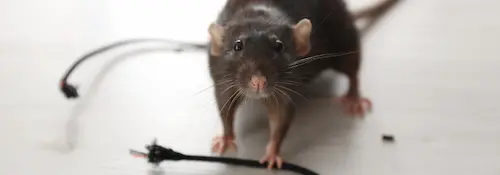
Rats don’t chew electrical wiring for food — their teeth never stop growing, and your cables are the easiest thing to gnaw. What’s left behind is exposed metal, a fire risk, and a power outage waiting to happen.
Most people think rodents are only after food. But here’s something that surprises almost everyone: rats and mice don’t chew electrical wires because they’re hungry — they chew them because they have to.
It’s Monday morning. You switch on the lights in your office. Nothing happens. Air conditioners won’t start, computers stay off, the internet is down — and staff, customers, and business all come to a standstill.
After an electrician checks the wiring, the culprit is found: a rat had been chewing through cables inside the ceiling for weeks. It isn’t rare. It’s something pest control professionals see regularly.
So, why do rodents chew electrical wiring?
The answer lies in their biology. Unlike humans, a rat’s front teeth never stop growing — they can grow several inches a year if not worn down. To keep their teeth in check, rodents constantly gnaw on hard materials: plastic, wood, cardboard, rubber, PVC pipes, and yes, electrical wires.
They aren’t trying to destroy your property. They’re simply following instinct — but your electrical system becomes the collateral damage.
Why electrical wires are such an easy target
Think about where cables usually run: behind walls, above false ceilings, inside storage rooms, under floors. These are exactly the places rats love to hide — dark, quiet, warm, and safe from predators. To a rodent, your ceiling is the perfect home, and your wiring sits right in the middle of it.
The real cost of a chewed wire
Many people assume replacing one damaged cable isn’t a big deal. But the real cost goes far beyond the repair bill.
⚠️ Electrical fires
When rodents chew away plastic insulation, the metal wire underneath becomes exposed. Two exposed wires touching can spark — and those sparks can ignite insulation, wood, paper, or stored materials. Damaged wiring is one of the most common causes of preventable building fires.
💸 Expensive repairs
Finding the damaged wire is often the hardest part. Electricians may need to break false ceilings, open walls, replace cable trays, repair insulation, and test the entire system. What looked like a small problem can quickly become a repair bill worth thousands.
⏳ Business downtime
Now imagine this in a restaurant during dinner hours, a warehouse running automated equipment, a hospital, a fully booked hotel, or a manufacturing unit. Even one hour without power can mean lost sales, delayed operations, unhappy customers, and a damaged reputation.
Your electronics aren’t safe either
Rodents don’t stop at electrical wiring. They also chew internet cables, CCTV wires, computer cables, air-conditioning wiring, server room connections, and security systems. A single rat can interrupt your entire network infrastructure.
Warning signs you should never ignore
Rodents usually leave clues before serious damage occurs. If you notice even one of these, it’s worth arranging an inspection before the problem escalates.
Why businesses are more vulnerable than homes
Commercial buildings offer everything rodents need: restaurants have food, warehouses have storage, hotels have constant guest movement, factories offer warmth and hiding spaces, and office buildings often have false ceilings packed with wiring. Without regular pest management, these environments become ideal breeding grounds.
“How many rats did you catch?” isn’t the real question. The real question is: how many are still hiding inside your walls?
Many property owners try a rat trap first, and while it might catch one or two rodents, it doesn’t solve the real problem. Professional rodent control focuses on eliminating the source of the infestation — not just the rodents you can see.
How professional rodent control protects your property
At MA Pest Control LLP, we don’t just place bait stations and leave. Our process includes:
- A complete site inspection
- Identifying entry points
- Locating nesting areas
- Safe baiting and monitoring systems
- Sealing rodent access points
- Long-term prevention plans
Whether it’s a home, office, restaurant, warehouse, hospital, or factory, our goal is to stop rodents before they damage your property.
Prevention costs less than repair
Think about the cost of replacing burnt electrical wiring, repairing expensive equipment, business downtime, fire damage, insurance claims, and lost customers — then compare that with a routine rodent inspection. Preventive pest control is one of the smallest investments you can make to avoid some of the biggest repair bills.
Final thoughts
Rodents don’t chew electrical wires because they want to ruin your property — it’s part of their natural behavior. But that instinct can have serious consequences for your safety, your business, and your finances. Don’t wait for flickering lights or a sudden power outage to discover you have a rodent problem. A small bite today could become a major repair tomorrow.
Protect your property with MA Pest Control LLP
Don’t let rodents turn your electrical system into a safety hazard. Book an inspection today.
Message us on WhatsApp





Leave a Reply
You must be logged in to post a comment.