







Your dream kitchen has a secret roommate.
The cupboard under the sink rarely gets a second look. That’s exactly where termites prefer to work — behind the panel you open only for the washing-up liquid.
It’s an easy thing to put off.
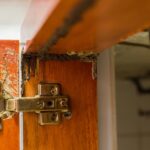
A corner of the panel has softened. There’s a thin brown line near the wall you don’t remember seeing. You make a mental note to call the carpenter — then the school run and the office calls take over, and the kitchen still looks fine from the outside.
Termites often stay concealed in wood, soil, or the mud tubes they travel through, so damage can go unnoticed until someone looks closely. A polished cabinet front says very little about what’s happening behind it — and not every swollen cupboard means termites. Moisture and worn fittings can look similar. The sensible move is finding out which one you’re dealing with.
Three things worth a closer look
Open the parts of the kitchen you don’t usually check — the plumbing connections, the backs of lower cabinets, anywhere dampness keeps returning.
A softened panel
Wood that gives slightly when pressed, near sinks or plumbing runs.
A thin brown line
Mud tubes run along walls or cabinet backs as a travel shelter.
Fine wood dust
Powder near small round holes can also mean powderpost beetles — worth checking rather than assuming.
Five questions to bring to the inspection
Ask for an explanation of the findings before discussing treatment price.
The space behind the cabinet doors deserves some attention too.
MA Pest Control LLP inspects modular kitchens across Kolkata — existing homes and buildings under construction.
Talk to our team






Leave a Reply
You must be logged in to post a comment.